Assistant Professor
Email:
cmccarte@uoguelph.ca
Office:
Bovey Administration Building 2110
Lab:
Bovey Laboratory Building 1241
Website links:
Pronouns:
he/him
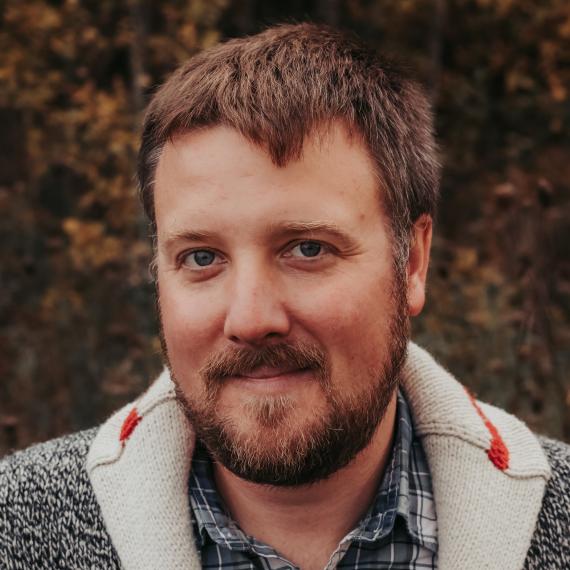
My interest in water, wetlands, and northern ecosystems began canoeing through Algonquin Park as a teenager. Since then, I have been driven to understand how hydrological, biogeochemical, and ecological processes interact and feedback to control key ecosystem services, such as carbon sequestration, pollutant removal, and flood mitigation. I am an assistant professor in the School of Environmental Sciences at University of Guelph, prior to which I was the Canada Research Chair in Climate and Environmental Change at Nipissing University. My research uses field experiments, laboratory analyses, and numerical modelling in an interdisciplinary space (e.g., soil physics, ecohydrology, trace metal and carbon biogeochemistry, restoration sciences) to understand how the hydrobiogeochemical processes that underpin ecosystem function are altered due to climate change and compounding disturbances (i.e., fires, forestry, mining) in natural, managed, and restored ecosystems. I am particularly interested in developing novel peatland restoration and management techniques to return the ecohydrological functions that lower wildfire risk, enhance toxic metal and carbon sequestration, and increase landscape biodiversity.
Research in the Metals and Ecohydrology Research Laboratory investigates how interactions among water, soil, vegetation, and biogeochemistry regulate the movement of water, carbon, nutrients, and contaminants through wetlands and the ecosystems and landscapes they connect to. A central focus of the research is the structure and function of organic soils, particularly peat, and how their complex pore networks influence water storage, solute transport, biogeochemical processes, and ultimately affect ecosystem resilience.
The research program spans fundamental and applied environmental science. At the process scale, the research group examines how pore structure, soil-water dynamics, and plant traits govern the ecohydrological function of peatlands. At the ecosystem and landscape scales, we study how climate change, drought, wildfire, drainage, peat extraction, mining, and historical industrial pollution alter carbon storage, greenhouse-gas exchange, water quality, and contaminant mobility. A major goal is to translate process-based understanding into more effective restoration and reclamation techniques. The lab uses an interdisciplinary combination of field monitoring, controlled experiments, hydrophysical and biogeochemical analyses, environmental tracers, reactive-transport, and environmental modelling. The resulting research connects small-scale soil processes with landscape-scale questions about climate mitigation, watershed management, wetland restoration, and environmental decision-making.
Historical mining and smelting have left some peatlands contaminated with toxic metals, disrupting peat-forming processes and creating a latent vulnerability and risk to local ecosystems and regional populations. This research examines how legacy pollution affects peat properties, greenhouse-gas emissions, soil and water quality, and vulnerability to drought and wildfire. Working with academic, municipal, and industry partners in the Greater Sudbury region, the team is developing restoration and reclamation methods that re-establish Sphagnum mosses and restore biodiversity, hydrological function, water-quality protection, and long-term carbon sequestration. We seek practical solutions that can support regional regreening and inform the restoration of mining-impacted wetlands elsewhere.
Successful peatland restoration requires more than bringing vegetation back. It also requires rebuilding the hydrological processes that keep peat wet and allow peat-forming Sphagnum mosses to survive. The Metals and Ecohydrology Research Laboratory studies how peat structure, pore connectivity, water table position, soil-water retention, afforestation and shifts in peatland vegetation post-restoration influence restoration outcomes and the underlying ecohydrological processes that support them. By linking field monitoring with laboratory experiments and numerical modelling, we aim to accelerate the recovery of peat accumulation, carbon sequestration, water regulation, and resilience to drought and wildfire.
Peat fires can burn below ground, release large stores of carbon, produce persistent smoke, and damage the ecohydrological processes that normally keep peatlands wet. We investigate how drought, drainage, peat harvesting, restoration, soil properties, and pollution interact to influence peat ignition and burn severity. Critically, this research examines an emerging risk: wildfire may remobilize toxic metals that peatlands accumulated over decades or centuries from industrial processes, such as smelting or coal burning. By identifying the conditions that make peatlands vulnerable to combustion and contaminant release, this work supports fire-resilient restoration, improved risk assessment, and better management of peatland carbon and water resources under a changing climate.
Disturbances such as forest harvesting, wildfire, drainage, and land-use change alter how water, carbon, nutrients, and contaminants move through landscapes. We investigate how environmental disturbances alter the movement of water, carbon, nutrients, and contaminants through interconnected landscapes, from the small “soil” scale to the catchment scale. By linking ecohydrological processes with biogeochemical transformations, this research supports forest and watershed management practices that protect water quality and strengthen ecosystem resilience to interacting environmental disturbances.
My supervision style is collaborative, individualized, and designed to develop confident, independent environmental scientists. I hold weekly and individual group meetings support research discussion, constructive feedback, problem-solving, and professional development. Each student works with me to create a training plan that reflects their interests, abilities, career goals, project responsibilities, and clear expectations for both supervisor and trainee. Students take leading roles in research design, field and laboratory work, data analysis, interpretation, communication with partners, and peer-reviewed publication, while receiving ongoing guidance and mentorship in experimental design, technical methods, writing, presentation, and navigating the arcane world of academia.
The Metals and Ecohydrology Research Laboratory offers broad interdisciplinary training across ecohydrology, catchment hydrochemistry, biogeochemistry, soil science, water quality, contaminant analysis, climate-change impacts, and environmental modelling. I encourage students to experience varied ecosystems, locations, methods (i.e., mixed field and laboratory studies), and collaborations so they graduate with adaptable, marketable skills. Research sites are scattered across Canada (boreal Ontario and Alberta, St. Lawerence Lowlands, etc.), often working in the beautiful peatlands and forests where booters, bugs, and bog-naps are common.
For the full list of publications, refer to Colin McCarter's Google Scholar Profile.